
Practice
International Trade, Sanctions and Customs
China trade rules have become a strategic issue: tariffs, export controls, countermeasures, origin rules and forced labour laws now shape where goods are made and sold. This guide maps the Chinese and international framework, the pressures of 2025 and 2026, and how to build a trade compliance programme that holds up across jurisdictions.
What this covers · 12
- 01Export controls and sanctions
- 02Anti-Foreign Sanctions Law and blocking rules
- 03Rare earths and critical minerals controls
- 04Customs compliance
- 05Tariffs, origin and customs valuation
- 06Inspection and quarantine
- 07Cross-border e-commerce
- 08Trade remedies
- 09WTO and trade agreements
- 10US Section 337 investigations
- 11International trade disputes
- 12Supply chain due diligence and forced labour rules
Key takeaways
- China trade compliance now spans customs, inspection, export controls, sanctions, countermeasures and trade remedies.
- The Tariff Law took effect on 1 December 2024 and gives a legal basis for retaliatory tariffs.
- China's dual-use export control regulations and lists have applied since 1 December 2024.
- Some 2025 rare earth and US tariff measures were suspended for a year; always check current status.
- Forced labour rules in the US and, from December 2027, the EU demand supply chain evidence.
China trade law at a glance
China trade rules now decide as much about a supply chain as cost and quality do. Goods leaving or entering China pass through four overlapping systems: customs law, which sets classification, valuation, origin and duty; inspection and quarantine, which controls product safety and biosecurity; export controls and sanctions, which restrict sensitive items and counterparties; and trade defence, which allows China and its partners to impose duties on imports they consider unfairly priced or subsidised. Each system has become more active since 2023.
For a foreign manufacturer in China, a Chinese exporter or a global brand sourcing from Chinese suppliers, the practical result is that trade compliance is no longer a back-office customs function. Classification decisions affect US tariff exposure; origin decisions affect access to free trade agreements and exposure to anti-circumvention rules; and a single component of US origin, or a single Chinese-controlled mineral, can change whether a shipment is lawful at all.
This practice area covers the whole of that landscape from a cross-border perspective. Our Shenzhen representative office advises on international trade law, foreign sanctions and export control regimes where our lawyers are qualified, provides information on the Chinese legal environment, and coordinates licensed PRC law firms and customs specialists where Chinese filings or representation are needed.
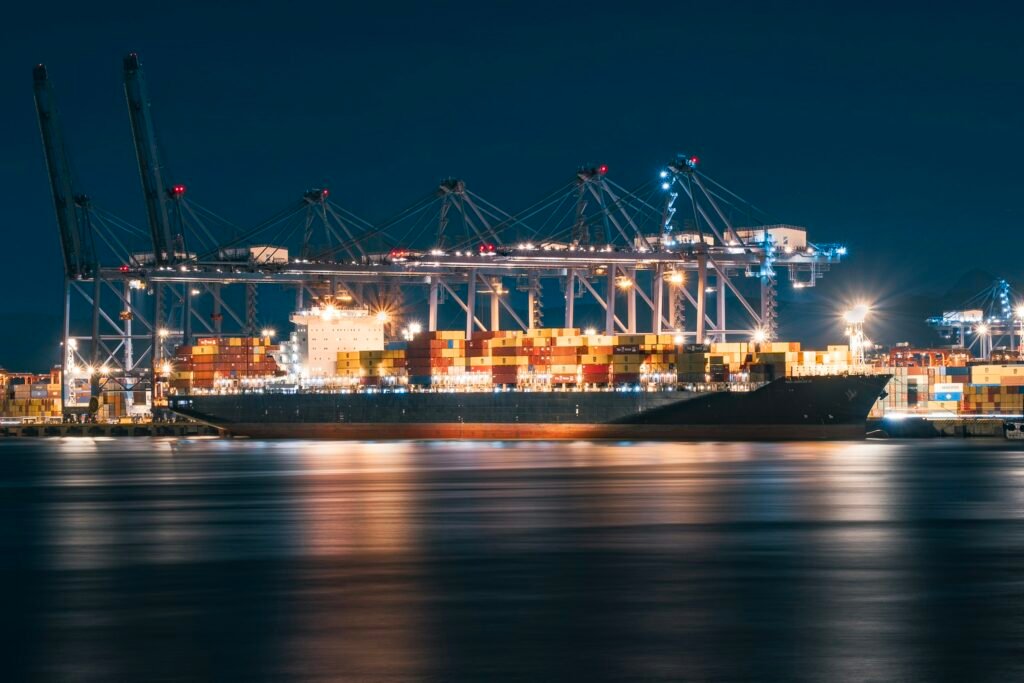
The regulatory landscape for China trade
The statutory framework for China trade has been rebuilt in stages. The Foreign Trade Law sets the overall principles and allows the state to restrict trade for security and other reasons; its 2022 amendment removed the registration requirement for foreign trade operators, and a revision adopted on 27 December 2025, in force since 1 March 2026, adds national security to its purposes and strengthens countermeasure and trade security tools. The Tariff Law, which replaced the old tariff regulations on 1 December 2024, sets duty rates and includes a legal basis for retaliatory tariffs. Customs, inspection, export control and countermeasure laws sit beside them.
| Instrument | In force | Main regulator | What it governs |
|---|---|---|---|
| Foreign Trade Law | 1994; revised 2004; amended 2016 and 2022; revised again with effect from 1 March 2026 | MOFCOM | Trade principles, licensing, trade remedies, countermeasures |
| Customs Law | 1987; amended several times | General Administration of Customs (GACC) | Declarations, duties, audits, penalties, smuggling |
| Tariff Law | 1 December 2024 | State Council Customs Tariff Commission; GACC | Rates, origin-based treatment, retaliatory tariffs |
| Import and Export Commodity Inspection Law | 1989; latest amendment 2021 | GACC | Statutory inspection, conformity, certification |
| Export Control Law | 1 December 2020 | MOFCOM and other control authorities | Dual-use, military and nuclear items, control lists, deemed exports |
| Regulations on Export Control of Dual-Use Items | 1 December 2024 | MOFCOM | Licences, end-user checks, control and watch lists |
| Provisions on the Unreliable Entity List | 19 September 2020 | MOFCOM-led working mechanism | Restrictions on foreign entities harming Chinese interests |
| Blocking Rules (MOFCOM Order No. 1 of 2021) | 9 January 2021 | MOFCOM-led working mechanism | Unjustified extraterritorial application of foreign laws |
| Anti-Foreign Sanctions Law and implementing regulations | 10 June 2021; regulations 23 March 2025 | State Council departments | Countermeasures, prohibition on implementing foreign measures |
| Anti-Dumping and Anti-Subsidy Regulations | 2002; revised 2004 | MOFCOM Trade Remedy and Investigation Bureau | Trade remedy investigations and duties |
The texts are published on the national laws and regulations database and on the websites of China Customs and MOFCOM. Below statute level, MOFCOM and GACC issue announcements, often with short lead times, that add items to control lists, change licensing practice or adjust tariffs. Monitoring these announcements is a core compliance task.
Pressures shaping China trade in 2025 and 2026
Tariffs and trade tensions
US tariffs on Chinese goods, first imposed under Section 301 in 2018, were sharply increased during 2025 through additional measures, and China responded with its own tariffs and countermeasures. A bilateral arrangement reached in late 2025 lowered some tariffs and suspended several measures on both sides for a year, and in September 2026 the two governments said it would continue until 10 January 2027. On 20 February 2026 the US Supreme Court held that the International Emergency Economic Powers Act does not authorise tariffs, but Section 301 and other tariffs remain, and the arrangement is political rather than treaty-based. Businesses should model several scenarios rather than plan around a single tariff rate.
Export controls on both sides
The United States continues to expand controls on advanced semiconductors, manufacturing equipment and AI-related items, and to add Chinese companies to restricted lists. China has built its own system: the Export Control Law, the dual-use regulations, controls on gallium, germanium, graphite, antimony, tungsten and other minerals, and from April 2025 controls on several medium and heavy rare earths. Broader rare earth measures announced in October 2025 were suspended in November 2025 until 10 November 2026; as at early November 2026 MOFCOM had not published a notice extending that suspension, so their status should be checked at the time of any transaction.
Origin, transshipment and supply chain rules
As production shifts to Southeast Asia, Mexico and elsewhere, importing countries are tightening origin verification and anti-circumvention enforcement. The US Uyghur Forced Labor Prevention Act, in force since June 2022, presumes that goods with inputs from Xinjiang are made with forced labour, and the EU's Forced Labour Regulation will apply from 14 December 2027. The EU has also imposed countervailing duties on Chinese battery electric vehicles since October 2024, while China has opened its own investigations into EU products such as brandy, pork and dairy.
Agreements and openings
Not every development is restrictive. The Regional Comprehensive Economic Partnership has applied to China since 1 January 2022, an upgraded China–ASEAN free trade agreement was signed in October 2025, and China extended zero-tariff treatment to all tariff lines for least developed countries with which it has diplomatic relations from December 2024. MOFCOM's FTA network lists the agreements in force.
What to watch into 2027
- Whether the suspensions agreed in late 2025, which the two sides said in September 2026 would run to 10 January 2027, are formally extended, replaced by a longer arrangement or allowed to lapse.
- How MOFCOM uses general licences, the control list and the watch list for rare earths and other minerals.
- Implementing rules under the revised Foreign Trade Law on countermeasures, trade security and trade adjustment assistance.
- Implementation guidance for the EU Forced Labour Regulation ahead of December 2027, and continued expansion of the UFLPA entity list.
- Anti-circumvention and origin investigations targeting production that has moved from China to third countries.
Our international trade, sanctions and customs practice areas
The pages in this practice cover each part of the China trade landscape in depth:
- Export controls and sanctions: Chinese export controls, US, EU and UK sanctions and export regimes, screening, licensing strategy and conflicts between them. Typical work includes classification reviews, licence planning and responses to list designations.
- Anti-Foreign Sanctions Law and blocking rules: China's countermeasure toolkit, the 2025 implementing regulations, the unreliable entity list and the practical dilemma for multinationals caught between Chinese and foreign obligations.
- Rare earths and critical minerals controls: licensing for rare earths, gallium, germanium, graphite, antimony and other materials, technology export restrictions and supply chain planning for downstream users in electronics, automotive, defence-adjacent and clean energy sectors.
- Customs compliance: declarations, post-clearance audits, voluntary disclosure, AEO certification, bonded zones and processing trade, together with the line between administrative violations and smuggling.
- Tariffs, origin and customs valuation: classification, rules of origin, FTA preferences, related-party pricing, royalties and advance rulings, and the interaction between customs value and transfer pricing.
- Inspection and quarantine: statutory inspection, CCC certification interfaces, food facility registration and biosecurity controls that determine whether goods can clear at all.
- Cross-border e-commerce: retail import and B2B export models, bonded warehouses, tax treatment and platform rules for brands selling into China and Chinese sellers going abroad.
- Trade remedies: anti-dumping, countervailing and safeguard cases brought by China and against Chinese exports abroad, including anti-circumvention inquiries into third-country production.
- WTO and trade agreements: WTO rules, RCEP, bilateral FTAs, accession processes and how agreements shape business planning.
- US Section 337 investigations: ITC patent and unfair import cases against Chinese manufacturers, exclusion orders, settlement and design-around strategy.
- International trade disputes: contract, letter of credit, sanctions-related and commodity disputes, arbitration and enforcement across China, Hong Kong and other seats.
- Supply chain due diligence and forced labour rules: UFLPA, the EU Forced Labour Regulation, EU due diligence laws and the supplier evidence importers now need to clear goods.
China trade compliance: building a programme
A credible China trade compliance programme does not need to be elaborate, but it must be owned by someone senior and connected to the business. The steps below reflect what regulators on several continents expect.
- Map flows. List products, routes, customers, end uses and countries. Include intra-group transfers of technology and software, which can be exports in their own right.
- Classify. Assign tariff codes, Chinese export control classifications and, where relevant, US ECCNs or EU dual-use codes. Record the reasoning.
- Determine origin. Apply the rules of each relevant agreement and the importing country's non-preferential rules; keep supplier declarations and costings.
- Screen. Screen counterparties against Chinese control and unreliable entity lists and against US, EU and UK lists, with an escalation path for conflicts.
- License. Identify licences needed in China and abroad, and build their timelines into contracts.
- Document and train. Keep records for the periods customs and export control authorities can audit, and train sales, logistics and procurement staff.
- Audit and disclose. Test the programme periodically and decide quickly whether errors call for voluntary disclosure.
Responding to a customs audit or export control inquiry
When customs or MOFCOM asks questions, the first days matter. Preserve records, identify everyone who handled the transactions in question, and establish quickly whether the issue is isolated or systemic. Avoid informal explanations to officials before the facts are understood. Where errors are found, Chinese customs practice gives weight to timely voluntary disclosure, and a well-documented correction can reduce or avoid penalties. If the same facts may interest a foreign authority, such as US export enforcement, coordinate the response so that statements in one jurisdiction do not undermine the position in another, and check data export and confidentiality rules before sending documents abroad.
| Stage | Key actions | Who leads |
|---|---|---|
| First 48 hours | Legal hold, fact owner, initial scope | Legal and trade compliance |
| First two weeks | Transaction review, root cause, exposure estimate | Trade compliance with licensed PRC counsel and specialists |
| Decision point | Voluntary disclosure, corrective filings, foreign notifications | General counsel and management |
| Remediation | Process fixes, training, contract updates, audit | Business owners with compliance oversight |
Write trade clauses for volatility. Contracts should allocate tariff changes, licence delays, sanctions designations and export bans explicitly, with suspension and termination rights and a mechanism to share added costs. Generic force majeure wording rarely answers these questions cleanly in China, Hong Kong or English law.
Decision points for common scenarios
A European manufacturer exporting from Guangdong to the United States. The key questions are the US tariff stack on its products, whether relocating final assembly would genuinely change origin under US rules, and whether its components include items controlled by China. A move to Vietnam or Mexico that relies on minimal processing invites anti-circumvention scrutiny. The manufacturer should also review customs valuation, because royalties and assists paid to the European parent can increase dutiable value in both China and the United States.
A Chinese exporter facing an anti-dumping case abroad. Cooperation decisions are made early and are hard to reverse. The exporter must decide whether to answer questionnaires, seek individual treatment and consider undertakings, while preserving its position for any related WTO or domestic court proceedings.
A multinational with US-origin technology in its China plant. It must check whether items or software are subject to US controls, whether any Chinese customers are listed, and how to handle a request that would breach US rules without contravening Chinese countermeasure laws.
A Chinese technology company building a plant in Hungary or Mexico. It faces controls in both directions. China restricts the export of some processing and manufacturing technologies, so transferring know-how to the new plant may need a technology export licence. The host country and its trading partners will scrutinise origin, subsidies and investment screening. Planning the technology transfer, equipment exports and local content together avoids late surprises.
A brand selling into China through cross-border e-commerce. It must choose between bonded import and direct mail models, confirm that products fit the positive list, and comply with labelling, consumer protection and data rules. Retail import limits per transaction and per year apply to consumers, and products outside the permitted model must clear as general trade with full inspection and labelling requirements.
Hong Kong, the Greater Bay Area and special customs zones
Hong Kong is a separate customs territory and a member of the WTO in its own right. It is a free port with very few tariffs, and controls strategic commodities under its own Import and Export Ordinance (Cap. 60) and its Strategic Commodities Regulations. Hong Kong implements United Nations sanctions through local legislation but does not itself impose unilateral US or EU sanctions. However, banks and businesses in Hong Kong that deal in US dollars or with US, EU or UK persons often apply those regimes as a matter of risk management. Since 2020, the United States has required goods made in Hong Kong to be marked as Chinese origin.
For many groups Hong Kong remains the natural place to hold regional trading companies, letters of credit and trade finance, and to seat arbitration of trade disputes. The key discipline is to remember that routing a contract, payment or invoice through Hong Kong does not change where goods are made, what they contain or who ultimately uses them, which are the questions customs, export control and sanctions authorities actually ask.
Within the mainland, comprehensive bonded zones and free trade zones, including Qianhai in Shenzhen, offer deferred duty, simplified procedures and processing options. The Hainan Free Trade Port launched island-wide special customs operations in December 2025, creating a distinct customs regime for goods entering Hainan and moving on to the rest of the mainland. These zones can be valuable for regional distribution, repair and maintenance, and cross-border e-commerce, but they come with strict record-keeping and supervision. Our Greater Bay Area and Hainan Free Trade Port guides cover these regional regimes.
Common mistakes in China trade
- Treating classification and valuation as broker decisions rather than company decisions with documented reasoning.
- Ignoring royalties and related-party pricing when declaring customs value.
- Assuming that a Hong Kong or Singapore intermediary changes origin or sanctions analysis.
- Screening only against US lists and not against Chinese control and unreliable entity lists.
- Relying on supplier assurances about Xinjiang content without traceability evidence.
- Failing to update contracts after tariff or control list changes.
Underneath many of these errors is a structural problem: China trade decisions are split between procurement, logistics, tax, legal and sales, with no one accountable for the whole. Penalties can be significant. Customs can impose fines and recover duties, and serious underpayment can be prosecuted as smuggling; see smuggling cases. Export control violations attract fines calculated as multiples of illegal turnover, and listing on a Chinese or foreign restricted list can cut a business off from customers overnight.
These errors often surface together in a customs audit or a foreign enforcement inquiry, which is why a single owner for China trade risk is valuable.
How TRW & Co helps
From our Shenzhen representative office we advise international and Chinese businesses on the cross-border side of trade, sanctions and customs. We map supply chains and control exposure, advise on US, EU, UK and Hong Kong sanctions and export control regimes where our lawyers are qualified, draft trade and distribution contracts, design compliance programmes and coordinate responses to foreign investigations and trade remedy cases. We provide information on the Chinese legal environment and work alongside licensed PRC law firms and customs specialists where Chinese filings, licences or representation are required. Our export controls and countermeasures guide is a good starting point. To discuss your position, please contact us.
Frequently asked questions
Does moving final assembly out of China avoid US tariffs?
Only if the processing abroad is substantial enough to change origin under the importing country's rules. Minor assembly or packaging usually does not, and authorities increasingly investigate transshipment and circumvention. The move may also raise Chinese export control questions if controlled components or technology are transferred, so origin and control analysis should be done together.
Who enforces export controls in China?
MOFCOM is the main authority for dual-use items and maintains the control and watch lists, working with other departments for military and nuclear items. China Customs enforces at the border. The Unreliable Entity List and countermeasures under the Anti-Foreign Sanctions Law are administered through working mechanisms led by MOFCOM and other State Council departments.
Can a foreign company comply with US sanctions in China?
Usually yes, but it must manage the risk that compliance is seen as implementing foreign measures that Chinese law opposes. The Anti-Foreign Sanctions Law, its 2025 regulations and the blocking rules create a framework for challenge. Careful documentation, contract design and escalation procedures reduce the risk of being caught between regimes.
How far back can China Customs audit our imports?
Customs can conduct post-clearance audits of import and export activities within a defined period after clearance, and can recover underpaid duties, with longer look-back periods where underpayment results from a violation. Keeping complete classification, valuation and origin records for the whole period is therefore essential.
Sources
- National Database of Laws and Regulations (NPC): Foreign Trade Law, Customs Law, Tariff Law, Export Control Law, Anti-Foreign Sanctions Law
- General Administration of Customs of China
- MOFCOM: China FTA Network
- Ministry of Commerce of the PRC
- China Daily: revised Foreign Trade Law adopted 27 December 2025, effective 1 March 2026
- HKSAR Trade and Industry Department: MOFCOM Announcement No. 70 of 2025 (suspension to 10 November 2026)
General information only, not legal advice. TRW & Co’s Shenzhen representative office does not provide PRC legal services; where a PRC legal opinion is required we work with licensed PRC law firms.