
Sector · Energy, Resources and Infrastructure
Water, Waste and Public Utilities in China
Water, waste and public utilities in China are being reshaped by the Ecological Environment Code, effective 15 August 2026, the user-pays PPP mechanism and the 2024 Franchising Measures. This guide explains the legal framework, tariff and safety issues, and the due diligence that investors, operators and technology suppliers need.
Key takeaways
- The Ecological Environment Code took effect on 15 August 2026 and replaced ten environmental laws.
- Utilities are mostly delivered under local franchises of up to 40 years under the 2024 Measures.
- Water and gas tariffs are set locally; delays in approving increases are a key operator risk.
- Hazardous waste generators remain liable if contractors dispose of waste illegally.
- Foreign-invested enterprises are treated by reference to the rules for private enterprises in franchises.
- Infrastructure REITs provide an exit route for mature water and waste assets.
Water, waste and public utilities in China: the landscape
Water, waste and public utilities in China form one of the largest infrastructure markets in the world. Cities need drinking water, sewage treatment, solid waste disposal, gas and heating for hundreds of millions of residents, and industry needs wastewater treatment and hazardous waste services under ever-tighter environmental standards. Most of these services are provided by local state-owned utilities, but private and foreign-invested operators have long played a role through franchises, joint ventures and service contracts.
Three developments shape the sector in 2026. The Ecological Environment Code, effective 15 August 2026, consolidated environmental legislation into a single statute. The new mechanism for public-private partnerships, introduced in November 2023, limited PPP to user-pays franchises and gave priority to private enterprises. And the 2024 Franchising Measures set a clearer framework for long-term concessions. This page explains what these changes mean for investors, operators, technology suppliers and lenders. It is general information about the Chinese legal environment; PRC law questions should be confirmed with a licensed PRC law firm.
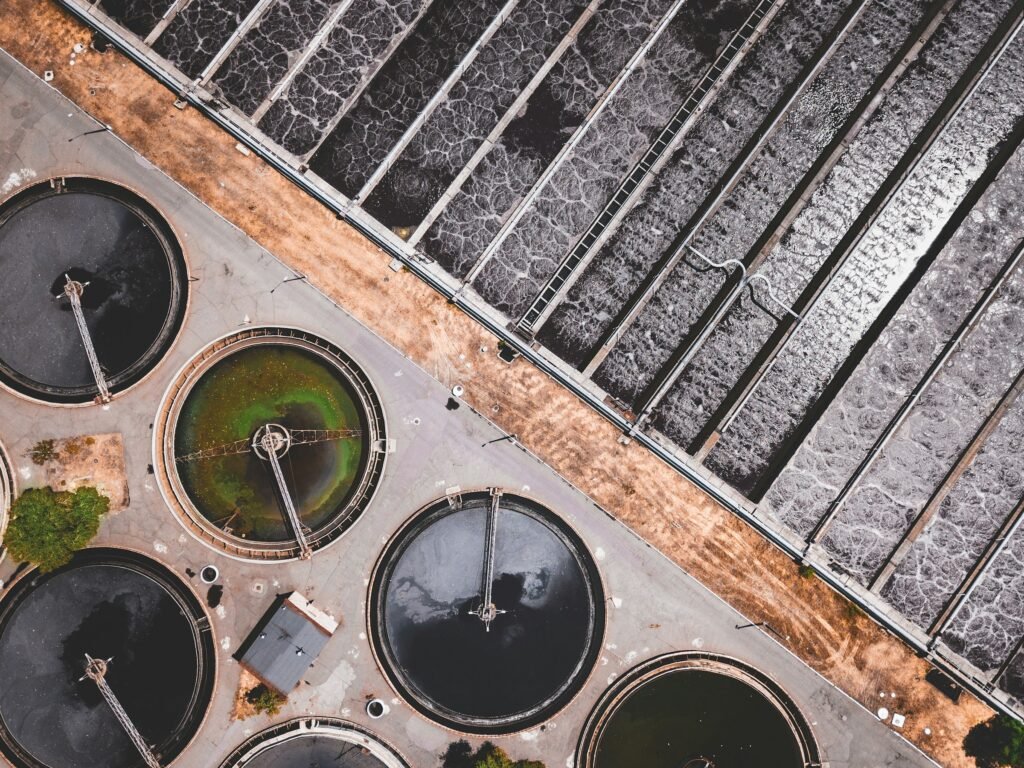
For international businesses, opportunities fall into three groups: owning or operating assets under a franchise; supplying technology, equipment and services such as membranes, incineration systems and digital monitoring; and providing industrial clients with on-site water and waste solutions. Each raises different legal questions, but all depend on local government relationships, regulated pricing and environmental compliance.
The legal framework for water, waste and public utilities
There is no single utilities statute. The framework combines environmental law, resource law, sector regulations, pricing rules and the franchise regime.
| Instrument | Status | Relevance |
|---|---|---|
| Ecological Environment Code | Adopted 12 March 2026; effective 15 August 2026 | Pollution control, impact assessment, permits and liability, replacing ten earlier laws |
| Water Law | In force | Ownership and allocation of water resources, abstraction permits |
| Yangtze River Protection Law and Yellow River Protection Law | Effective 1 March 2021 and 1 April 2023 | Basin-specific restrictions on industry, discharges and water use |
| Regulations on Urban Water Supply | In force (amended) | Licensing, quality and service obligations of water suppliers |
| Regulations on Urban Drainage and Sewage Treatment | Effective 1 January 2014 | Drainage permits, sewage treatment operations and sludge |
| Regulations on Urban Gas Administration | In force (amended 2016) | Gas operating licences, safety and service obligations |
| Administrative Measures for Infrastructure and Public Utilities Franchising | Effective 1 May 2024 | Franchise process, terms up to 40 years, termination and disputes |
The Ecological Environment Code is the most significant change. It has 1,242 articles and consolidates more than 30 environmental laws. On its entry into force, ten laws were repealed, including the Environmental Protection Law, the Environmental Impact Assessment Law, the Water Pollution Prevention and Control Law and the Solid Waste Pollution Prevention and Control Law. With effect from the same day, the State Council amended twelve related administrative regulations and repealed three, and ministry rules and normative documents that cite the repealed laws now need to be read against the new text.
For operators of water, waste and public utilities assets, the Code does not change the basic logic of regulation: discharge and emission permits, environmental impact assessment for new projects, monitoring and disclosure duties, and liability for pollution. It does change the citations, some definitions and the structure of penalties, so compliance manuals, permit registers and contracts that refer to repealed laws should be updated.
Water supply, wastewater and sludge
Urban water supply and sewage treatment are local public services. Water suppliers need operating qualifications and must meet drinking water quality standards and service obligations. Sewage treatment plants operate under drainage and discharge permits, must meet effluent standards that have tightened in many river basins, and must manage sludge safely.
Tariffs. Residential water prices are set by local governments, usually after cost supervision by the pricing authorities and, for residential tariffs, public hearings. Sewage treatment fees are collected alongside water bills and paid to treatment operators under service agreements. Tariff adjustments are politically sensitive, and delays in approving increases are a recurring source of financial pressure for operators.
Industrial wastewater. Factories must hold pollutant discharge permits and may pre-treat effluent before discharging to municipal plants or treat it fully on site. Chemical parks often contract a specialist operator to run a central treatment plant. Contracts should allocate responsibility for influent quality: if a factory sends effluent outside agreed limits, the operator should not bear the resulting breach of discharge standards.
Basin rules. The Yangtze and Yellow River Protection Laws impose additional restrictions on new chemical projects near the rivers, water abstraction and discharges. Investors in water-intensive industries in those basins should treat water availability and permit conditions as core due diligence items.
Water rights trading and water resource fees add a further layer for large users. Abstraction permits under the Water Law limit how much water a facility may take, and in water-scarce regions new industrial projects may need to acquire water rights from existing users.
Solid waste, waste-to-energy and hazardous waste
China's waste sector has changed rapidly over the past decade. Mandatory household waste sorting has been rolled out in major cities, landfill is being replaced by incineration with energy recovery, and kitchen waste treatment has grown into its own market. Since 1 January 2021, China has prohibited imports of solid waste, ending its role as a destination for foreign recyclables.
Waste-to-energy. Incineration plants are usually developed under franchises with a tipping fee paid by the local government and electricity sales to the grid. Earlier renewable power subsidies for waste-to-energy have been phased down, so new projects depend more on tipping fees and heat sales. Emissions standards, particularly for dioxins, and community acceptance are critical. Long-term contracts should address minimum waste supply, waste composition, tipping fee adjustment and the effect of changes in subsidy policy.
Hazardous waste. Collecting, storing, treating and disposing of hazardous waste requires a hazardous waste operating licence, and every transfer must be tracked through the electronic transfer manifest system. Industrial generators remain responsible for ensuring their waste reaches a licensed operator, and illegal dumping can lead to criminal liability as well as large environmental damage claims. Foreign-invested manufacturers should audit their hazardous waste contractors regularly rather than relying on contractual warranties.
Environmental liability in China can follow waste long after it leaves a factory. If a contractor dumps hazardous waste illegally, the generator may face administrative penalties, ecological damage compensation claims and public interest litigation, and individual managers may face criminal investigation. Verify licences, visit facilities, keep manifest records and include audit rights and termination triggers in every waste services contract.
Extended producer responsibility is also expanding. Producers of electrical and electronic products, batteries, packaging and vehicles face growing recycling and take-back obligations, and battery recycling in particular is subject to traceability and standards requirements that link to the wider new energy vehicle supply chain.
Technology suppliers face their own legal issues. Contracts for membranes, incinerators, sensors and digital control systems should address performance guarantees tied to measurable outputs, the interface with the operator's permit obligations, spare parts and long-term support, and intellectual property in software and process know-how. Where remote monitoring systems transmit operational data offshore, Chinese data security and cross-border data rules may apply, since data relating to critical public utilities can be sensitive. See our page on cross-border data transfer.
Gas, heating and district energy
City gas distribution is typically operated under exclusive local franchises. Operators need gas operating licences and must meet strict safety obligations under the Regulations on Urban Gas Administration. After a fatal gas explosion at a restaurant in Yinchuan in June 2023, the authorities launched a nationwide gas safety campaign, and a programme to replace ageing urban gas pipelines continues. Safety failures can lead to suspension of operations, licence revocation and criminal liability for responsible individuals.
End-user gas prices are regulated by local pricing authorities, while wholesale and city-gate prices have been progressively liberalised. The resulting squeeze between procurement costs and regulated retail tariffs has been a recurring issue for distributors, and pricing pass-through mechanisms are a key part of any investment analysis.
District heating in northern China is another major utility market, increasingly shifting from coal to gas, electricity, industrial waste heat and heat pumps. Heating franchises and energy performance contracts raise similar issues: regulated prices, collection risk, government subsidies and long-term supply obligations. Distributed energy projects at industrial parks, combining heat, power, cooling and storage, are an area where foreign technology providers and investors are active.
Energy performance contracts with industrial or municipal hosts should define the baseline against which savings are measured, the method for verifying savings, ownership of equipment during and after the term, and what happens if the host's operations shrink or relocate. Collection risk is significant, so security such as payment guarantees or escrow arrangements is often worth negotiating at the outset, particularly where the host is a local government entity with limited budget flexibility.
Investing in water, waste and public utilities: structures and due diligence
Most of the sector is open to foreign investment. Water, waste and public utilities are not generally restricted under the current national negative list (2024 edition), although sector licensing still applies. Under the November 2023 PPP support list, waste treatment and industrial park infrastructure are among the categories that should be controlled by private enterprises, and water supply and heating are among those where private enterprises should hold at least 35% of the equity. Under the 2024 Franchising Measures, foreign-invested enterprises are treated by reference to the rules for private enterprises. See our page on PPP projects.
Investment typically takes one of four forms: bidding for a new franchise; acquiring an existing operator or a stake in a local state-owned utility; forming a joint venture with a local utility; or entering long-term operation and maintenance or service contracts without owning the asset. Acquisitions of state-owned stakes usually require valuation and a transfer through an equity exchange, which limits room for bespoke negotiation.
A due diligence checklist for water, waste and public utilities targets should cover:
- franchise agreements, their term, exclusivity, tariff mechanisms and termination compensation;
- operating licences, discharge and emission permits, and their consistency with actual operations under the Ecological Environment Code;
- tariff history, receivables from government counterparties and any arrears;
- environmental compliance records, penalties, rectification orders and contamination at sites;
- safety records, especially for gas and hazardous waste businesses;
- land use rights and any facilities built on allocated or collective land; and
- employees, including staff transferred from state-owned predecessors.
Merger control may apply where thresholds are met, and a change of control of a franchise holder usually needs the consent of the implementing agency. See merger control filings. Exit options include infrastructure REITs for mature, cash-generative assets such as sewage and waste-to-energy plants. See China REITs and pre-REITs.
A worked example shows how these points combine. A European environmental services group plans to buy a majority stake in a company operating three industrial wastewater plants in a Jiangsu chemical park. Ownership is permitted, but the buyer must check that each plant's discharge permit covers current volumes, that influent standards in customer contracts protect the operator, that the park's central plant franchise allows a change of control, and that no environmental penalties or rectification orders are outstanding. Price adjustments and specific indemnities then address what diligence finds, and the sale agreement provides for the implementing agency's consent as a condition.
Several mistakes recur in transactions in this sector:
- Valuing a franchise on contractual tariffs without checking whether past adjustments were actually approved and paid on time.
- Treating government receivables as risk-free, when arrears from local authorities have been a persistent problem in some regions.
- Overlooking the consent required from the implementing agency for a change of control, which can delay closing by months.
- Assuming that environmental liabilities stay with the seller, when ecological damage and remediation claims can attach to the current operator or landholder.
- Underestimating community opposition to waste incineration and similar facilities, which can stall expansion or renewal.
Enforcement deserves a final word. Environmental public interest litigation by procuratorates and qualified social organisations, and ecological damage compensation claims brought by government authorities, are established features of Chinese environmental law and are carried forward in the Code. Operators of water, waste and public utilities facilities are frequent defendants because their activities are visible and continuous. A strong compliance record, accurate monitoring data and prompt rectification of any exceedance are the best defences. Falsifying monitoring data is treated particularly seriously and can lead to criminal prosecution.
Chinese utilities and environmental groups are also expanding abroad, especially in Southeast Asia, the Middle East and Central Asia, bidding for water and waste concessions financed by development banks. See international projects and overseas EPC and our guide to ESG and carbon in China.
How TRW & Co helps with water, waste and public utilities
From our Shenzhen representative office, TRW & Co advises international investors, operators and technology suppliers, and Chinese utilities expanding abroad, on water, waste and public utilities matters with a cross-border element. We structure acquisitions, joint ventures and franchise bids, negotiate shareholder, service, EPC and financing documents, advise on English law and other non-PRC laws, and coordinate environmental and technical due diligence. Where PRC legal opinions, filings or representation are required, we work with licensed PRC law firms and manage the combined team. To discuss a project, contact us.
Frequently asked questions
Can a foreign company own a water treatment plant in China?
Generally yes. Water supply and sewage treatment are not restricted under the 2024 national negative list, and foreign-invested enterprises can hold franchises on the same basis as private enterprises. Sector licences, local franchise conditions and support-list equity rules still apply, and acquiring a state-owned stake usually requires a transfer through an equity exchange.
Are environmental permits still valid after the Ecological Environment Code?
Existing permits generally remain valid. The Code consolidates and replaces the earlier laws, and related regulations were amended. Operators should update compliance manuals, permit registers and contracts that cite repealed laws, and check renewal conditions and penalties under the new text with PRC counsel.
Who sets water and gas tariffs?
Local governments, through their pricing authorities, set or approve residential water and gas tariffs, usually after cost supervision and, for residential prices, public hearings. Franchise agreements should define the adjustment formula and what happens if an increase is not approved on time.
Can China import waste for recycling?
No. Since 1 January 2021 China has prohibited imports of solid waste. Some processed materials that meet product standards, such as certain recycled raw materials, may be imported as goods rather than waste, so classification and customs standards must be checked carefully.
How long does a utility franchise last?
Under the 2024 Franchising Measures, franchise terms are generally up to 40 years, with longer terms possible for projects with large investment and long payback periods if justified in the implementation plan. Water and waste franchises commonly run for 20 to 30 years.
Sources
- Xinhua: Ecological Environment Code takes effect on 15 August 2026
- Xinhua: Ecological Environment Code and the codification of environmental law (15 August 2026)
- State Council Gazette: Administrative Measures for Infrastructure and Public Utilities Franchising (2024)
- Yicai: new PPP mechanism and private investment support list (November 2025)
- NDRC: interpretation of the 2024 foreign investment negative list
- State Council decision amending and repealing administrative regulations for the Ecological Environment Code (via MEE, August 2026)
General information only, not legal advice. TRW & Co’s Shenzhen representative office does not provide PRC legal services; where a PRC legal opinion is required we work with licensed PRC law firms.